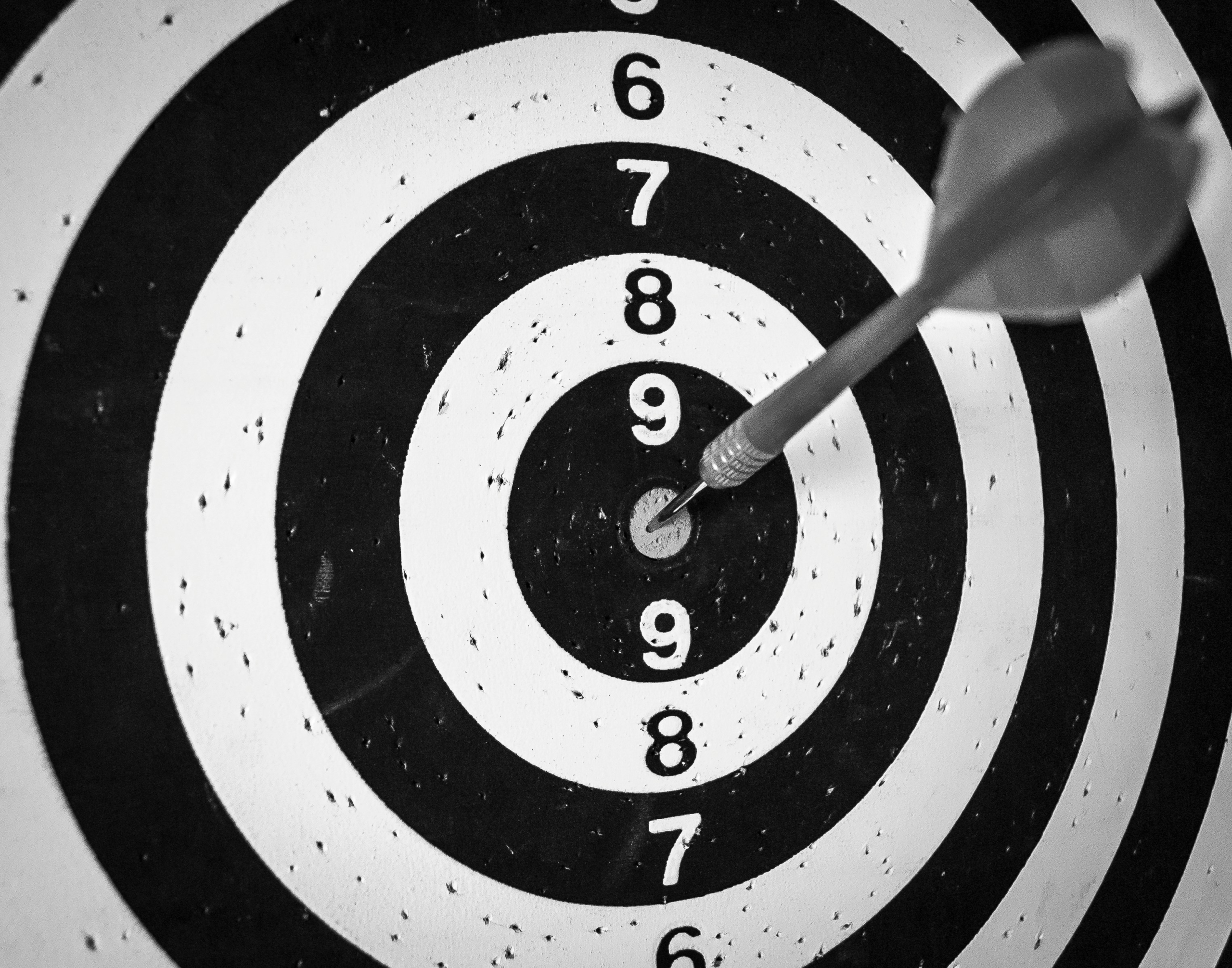
This post argues that we must affirmatively decide what we want to do and make it a priority. We are surrounded by people willing to provide tips, guidance, and philosophies, but this information is only helpful if we take time to think about where we want to go. Active decision making helps us identify goals, plan steps toward them, and locate experts for guidance.
Make the Choice
We are most successful in accomplishing our goals when we take time to think about where we want to go. Active decision making is the process by which we weigh tasks, opportunities, and situations and make a deliberate effort toward a goal or outcome. These decisions are influenced by experiences, advice and our general intuition.
Throughout any decision making process, we are surrounded by people and entities interested in guiding us toward their beliefs and businesses. While experts, businesses, and past experiences can be incredibly useful, they can also be distractions if we aren’t confident about what we want to do or where we want to be.
Take a little time to consider what you value before letting someone else tell you what’s best. There are endless tasks trying to fill up our time each day, so if there’s something we want to do, we have to make a point of going out and doing it.
The question: how do we decide where we want to go, and how do we get ourselves to actively work toward the it?
Don’t Wait for Your Inbox
These days, you can get an opinion on pretty much anything sent to your inbox.
- You want stock suggestions? There are dozens of newsletters on that.
- You need workout routines? Someone can email you fresh routines every morning.
- Meal prep? Ask and you shall receive.
Note: I do not use these services, so I can’t provide any recommendations. I’m sure a quick search would do you wonders.
While these newsletter experts increase accessibility to high-quality information, I find that much of the information can be a distraction from where I want to go, especially if I don’t have a good idea of what I want to do. Knowledge is critical for quality decision-making, but there is always more to learn and swimming through dozens of newsletters on an array of topics can be time consuming.
Further, we tend to better receive and understand information if it’s about something we enjoy or want to study. Well, sometimes I’m seeking information about things that themselves I don’t want to do but that apply to an overarching goal of mine (i.e. operating a successful business/helping people).
We are most successful in filling our days with things we enjoy when we think about what we want to do and make a deliberate effort to do it. In order to do this, we have to make active decisions.
Active Decision Making
Active decision making involves considering an action, weighing its pros and cons, refining its scope, and determining whether or not to engage. This process of studying situations and engaging in a deliberate choice often arises in pursuit of a larger goal. The whole idea is that we can assess, evaluate, and act toward what we seek to accomplish.
Well-structured active decision making is the most effective way to pursue large objectives and break down obstacles into manageable segments. Let’s consider an example:
You want to be a high performance athlete. This is your dream, and you have set your mind to it.
What do you mean by high performance athlete?
A high performance athlete for you is someone who can run, jump, and move around well without injuring themselves constantly. You also want to be strong.
Do you want to be a professional athlete?
You don’t like the long-term injury risks from professional athletics and don’t have any sport you’re passionate about. Also, you want an office job that keeps you active in your community.
How will you become a high performance athlete?
You will train regularly to understand how your body works, make it stronger, and make it more resistant to injury.
When will you train?
Your work is 9-5, and you’re most motivated after work, so you schedule gym sessions for the nighttime (note: you can make time for fitness everyday through micro assessments).
How often to you want to train?
You want to be high performance, but you don’t want gym to be your whole life. Fitness will fit in several days a week, and you will leave room for breaks and regular life.
What is your risk tolerance?
You want to be high performance, but you want to do it in a way that keeps you from getting hurt. High level athletic feats will come, but not at the constant risk of injury.
The above scenario displays active decision made in the overarching pursuit of a larger goal the individual also actively decided upon.
The example revolves around the decision to be come a high level athlete. This example shows how someone might actively plan out how they approach and define their goals. Each step along the way involves active thought into what would make the goal a success, leaving little room for passive decision making.
Active vs. Passive Decision Making
Active decision making requires us to think out an situation and make a choice. Compare this with passive decision making, which is when outside factors make a choice for you:
Imagine you’re deciding whether or not to go to a movie premiere.
An active decision might involve you considering the actors, how likely the movie is to sell out, and whether the premiere fits your schedule. After considering these factors, you would act and either get the tickets or hold off.
A passive decision would be made by factors out of your control. Let’s say you’re deliberating on the movie, and then the tickets sell out. Even if you decide you want to go to the movie, the choice has been made for you that you won’t be going (unless you really get after it and buy scalped tickets or look for another theater, which would be an active decision process).
Unlike active decision making, passive decision making lets the decision be made for you. While passive decision making might keep us from doing what we actually want, we tend to rely on it because active decision making is difficult.
Barriers to Active Decision Making
Making an active choice is hard. Not only must we reach a conclusion and act upon it, but if we wish to give ourselves the best chance of making a good decision, we must do so after weighing potential options and allocations of time.
Imagine you’ve decided to get a new car. You could simply pick out a car based on looks, but you will be more likely to get what you need at the right price if you weigh your options beforehand.
Active decision-making requires thought about what we want to do and who we want to be. If we don’t work on a vision for ourselves, each decision will either be made through guessing or working through a decision’s pros and cons each time we have to make one, reducing the likelihood of an efficient choice.
Furthermore, acting without a vision forces us to create our vision piece-by-piece, which can lead to pieces not fitting together properly and requiring us to re-do work. This incongruency naturally results in inefficiency and/or duplicative work, further delaying progress and building negative perceptions along the way. If we think about where we want to go, we will more easily recognize which activities fit the plan and which will lead us off course.
Building a Vision to Improve Active Decision Making
We can most easily make active decisions toward a goal if we have an overarching vision of where we want to be. We can construct a framework for where we see our future lives so that we can easily make active decisions toward the framework by doing what I call building a vision.
Building a vision is the ever-constant process of considering where you would like to be in the future and determining which steps are needed to progress toward this future self.
As discussed more HERE, our vision is something that is created based on our past experiences and preferences. It does not need to be rigid (and most often tends to benefit from some flexibility), so long as we take time to learn what we value and how to preserve those aspects of our vision as time progresses.
Building a vision is important because it sets a base frame for you to construct future strategies and plans. For example, if you envision yourself as one day becoming a mathematician, you will more easily recognize the value of adding more math courses to your college course selection. Upon further examination of your vision, you may determine that you are interested in a particular type of mathematical modeling and select courses that provide you more exposure on the subject.
Once we have built our vision, we can more easily make active choices toward our defined goals. Most importantly we can change and refine our vision as we grow, allowing us to account for new preferences and experiences.
Changing Your Vision With New Information
Building a vision is a great way to guide decisions toward a unified goal, and it is most effective when we allow it to change as we grow. We are always learning, and new experiences can alter how we decide to approach a particular activity or whether we want to continue with.
New experiences will constantly test our vision, helping us replace pieces that do not fit and paint over outdated ideas. The most important thing for us to do is keep moving forward and providing ourselves more opportunities to learn.
With that, it’s helpful to realize that active decision making does not require us to build everything from scratch. There are things we may want to learn that are well-documented and/or regularly discussed by talented people in the field. While we should not be discouraged from doing work we want to do, we can save ourselves lots of time by letting others teach us about the things we want to learn.
Sometimes, all it takes is an email address.
Actively Building Your Inbox
An active choice to remove something from our plate can be a wise decision. For example, if know we like to exercise, have a style we enjoy and that has helped us get the results we seek, and do not like building every workout, actively deciding to have someone else put a routine together for us and send it on a regular cadence is a great way to save effort and reduce the barrier to exercising.
If we locate quality resources that can save us time, we allow ourselves the opportunity to progress more quickly in our areas of interest while avoiding time-intensive base tasks. As you know, I am passionate about the basics, but, I recognize that we humans are collaborative beings that do not have the time to be the best at everything. Therefore, I advocate for using good resources to learn the basics and devoting most of your time to building your vision.
For example, I like to know generally about what’s going on in the world around me. Beyond politics (which, I’ll admit, I don’t follow closely), I like to follow trends in science, domestic headlines, international finance/markets (which is a fascinating way to track human communication, confrontation, and collaboration), and local news.
While I am interested in these subjects and know that they impact my vision, I am not interested in discovering and writing about news, nor would I have the time to do so and fit everything else into my day.
Letting Experts Help
Therefore, I track strong resources and let them send me what they think is important. This way, I can update myself on areas of interest and more quickly conduct further research based on what speaks to me.
My favorite academic/news resource is The Economist. I find that they have top-tier publications (both in audio and written formats) that cover a wide array of subjects at expert levels. The Economist is a paid service (which I find worth every penny), but many students can get discounts or even free subscriptions depending on their institution.
Each morning, I receive updates on headline news, domestic and international stories, and any of my interests that the journal discusses directly to my email. Furthermore, these brief email updates link to more comprehensive works, allowing me to study further if interested.
An actively build email subscription list can help us save effort in finding our news and keeping ourselves up to date. Just try not to overdo it.
Steady Building
As previously discussed, we are in the best position to make a good decision when we give ourselves the chance to think about what we seek to accomplish and weigh options. This process itself can be time consuming, but it should not be foregone if we want to steadily build a durable system and improve our access to good tools.
Throughout this process, it can be easy to feel compelled to find shortcuts or fast passes to learning more. I find this most easily comes in the form of email subscriptions. For example, when I first found success in adding strong mailing letters from The Economist to my daily email list, I went a little overboard adding more. I began receiving emails from Bloomberg, Barron’s, The Wall Street Journal, and anyone else kind enough to offer me morning (and, eventually, evening) snippets.
Going Overboard
By the end of my efficiency newsletter kick, I was receiving ~30 news focused emails every single morning. I had curated an inbox that discussed local news, national and international highlights, as well as fun topics across any area of interest (which, you may note, is almost never sports for me. I love to play sports, but am not the person to track players or watch a game. Football is to be played in the backyard with friends, not tracked to the third string safety. But, hey, that’s just me).
Needless to say that at this point I never read a single newsletter.
My desire to make it easier to pursue different interests overwhelmed me and made what could’ve been a good tool too much work to follow. Once I collected over a certain number of newsletters, I struggled to remember which ones I enjoyed and which were better for different applications. The amount of choice and sheer quantity made an easy news update into an overwhelming morning hassle.
Conclusion
There is always more we can do, so we must actively pursue the goals we want. We can accomplish incredible feats if we give ourselves the chance to go after them and succeed.
Throughout day-to-day life, we will find ourselves surrounded by others who want to collaborate and interact. These people may be able to make your work easier, but it’s important to note that peers bring their own experiences, preferences, and goals. Learn to seek good information that helps you move toward your goals, but remember that only you can determine your dreams.
If we want to study what we enjoy and create something, we have to take time to think about what we see for our futures. These visions can create flexible frameworks to help us build an idea of where our time is best spent. Once we start building a vision and actively working toward goals, we will better learn to spend our time and take good help as we find it. Just try not to over do it!
Thoughts? Questions? Good newsletters for me to consider? I’m all ears!
-G
Does this post interest you? Consider reading The Pitch to see what EfficientlyELITE is all about!
One response to “Active Decision Making”
[…] Our differences shape where we spend our time, how we manage our homes, and what makes us happy. It’s ok to be different, and it’s important to recognize how we weigh our tasks and preferences so that our time and choices work toward our end goals. […]