This post is to serve as a guide for readers interested in picking good sneakers. I find that good sneakers look cool, fit comfortably, and help me improve my foot strength and develop my range of motion. There are tons of fads and unsustainable sneakers created this day, so use these tips to find what works best for your feet.
I have linked resources that have been helpful to me. Some of these resources are products (such as books) available for purchase. These products may be linked through affiliate links. If you click on a link and make a purchase, I may receive a small commission at no extra cost to you.
Sneakers are Fun
First off, let it be clear that I love cool shoes.
While at my first job (washing dishes at 14), I purchased 37 different pairs of sneakers over the course of my employment (you could say I went a little overboard). I was no hype beast chasing limited drops or designer brands, I just liked fun colors and new styles.
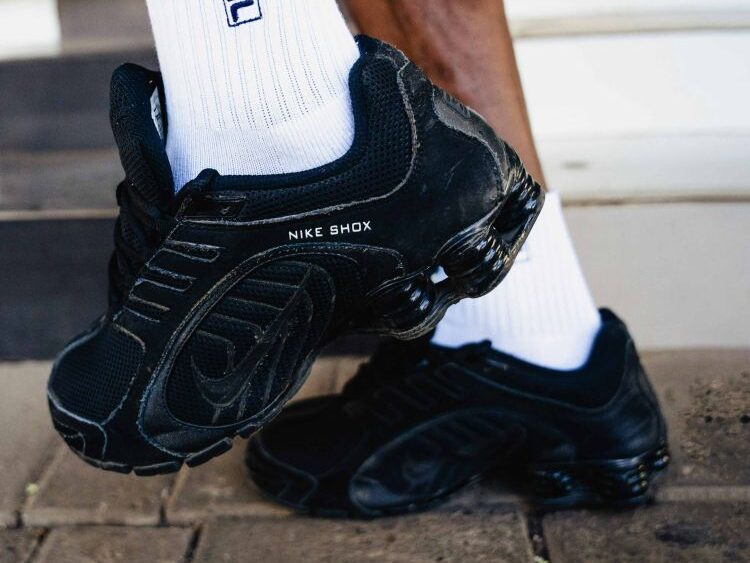
Going through all of these sneakers pointed to several desirable and undesirable traits (and some traits that seem like pros but are actually cons) in the sneaker game. Some trends last longer, and some age poorly (you should see the sheer number of Shox I own that I will never wear again). What’s most important is finding shoes that help you move better.
Here I will provide my recommendations for sport/athletic shoes. I am not a podiatrist, but I have gone through countless sneakers in pursuit of ones that best help me move around comfortably and athletically.
I hope these recommendations help! First, let’s consider a few factors important to picking a good sneaker:
Good Athletic Sneaker Traits
A good sneaker will be comfortable throughout its whole life cycle, resist staining and be easily washable, look good, and let you develop your foot strength and control. Most importantly, I want my sneakers to:
- Flex and allow my feet to use the muscles they have.
- Our feet aren’t hammer heads, and can accomplish nuanced tasks (you ever have a friend who likes to grab stuff with their feet? These flippers can be dexterous).
- Protect my feet from movement-limiting injuries.
- When we start, this tends to look like rolling ankles and smashing heels.
- As we develop our foot musculature and control (which is largely done through developing the lower leg muscles, both back of leg like those in the calf, controlling pushing toes downward, and front of leg like the tibialis, which helps control pulling the toes upward), we will improve our stability and resistance to rolling ankles and clomping the ground. We will still want resistance to cuts, punctures and pokes from things on the ground (nails, glass, thorns, etc.).
- Fit well, but not too tightly
- Loose shoes make us doubt our ground stability, lowering our confidence and ability to move. At the same time, overly-restrictive shoes impede foot development. We are beyond foot binding, and it’s important to recognize that our feet develop when they are allowed to move.
My Experience
I put my sneakers through most everything. While I am a huge opponent of “Big Running” (which I will discuss more in a separate post), I do love to jog, sprint, bike, jump, and kick soccer balls around. We can pick sneakers that are specialists in each of these departments, and we can also find some that do most things pretty well overall.
The best sneaker depends on your current training level, your expected use cases, and your style/ material preferences. I like to have pairs that have good overlap abilities (ex. you can wear them on a date night and they’re also good to walk in), as well as pairs that let me work out more effectively.
Things to Avoid: Overly-Padded Shoes and Big Heel-Drops
As previously mentioned, I’ve bought a lot of pairs of shoes I might never wear again. Some of these shoes, including my once-beloved Nike Shox, have been relegated to the wear-for-effect-only department of my closet (if not the trash can, sorry high-school G). While we’ve been sold on a lot of shoe styles, many of them hurt how we walk. We are particularly susceptible to these marketing techniques when we are new to exercising or have weaker legs, feet, or stability in general.
When we are new to developing our foot control and leg stability, we may notice how easy it is to roll an ankle or lose our balance. This is normal.
Often, I see people recommend these big, clunky shoes that offer oodles of padding and walk like they’re pillows strapped to our feet.
I do not find these shoes helpful. In fact, I find that they hinder my movement.
Too Much Shoe Limits Foot Learning
In my experience, overly-padded shoes and shoes with a big heel (commonly discussed in terms of the shoe’s heel-drop) negatively impact my ability to walk. These shoes restrict my foot’s ability to interact with the ground and force me to slam my foot first, causing me knee irritation and messing with my overall posture.
Our legs and feet combine a wide array of sensitive muscles to respond to the surfaces below. They can adjust for slight level changes and help us maintain control on rough terrain. When we rely on heavily-padded shoes, we lose much of the precise stimuli that force our feet to develop. Fewer inputs means fewer opportunities to grow (remember, diverse information is key! For more on this, consider my section on Basic Movement).
I prefer to build my base so that it is adaptable to my terrain. Sneakers that have helped with these process tend to fall within a few specific keywords, discussed below.
Good Sneaker Search Keywords
If you’ve gotten this far and want to start doing some field research yourself, I don’t blame you! Shoes that fit my demands tend to fit a few keywords:
- Wide toe box
- I’m sorry if you’ve been tortured by the wide toe box craze. It’s important that our toes have the ability to move, yet I know people can be annoying about it. This keyword is essential because we can find shoes that fit all the other categories but don’t allow our toes the ability to express themselves.
- Unfortunate to this category is that many people try and differentiate themselves with wild shoe shapes and designs. The problem here is that many are just plain UGLY. I don’t care how good a shoe is if it doesn’t look good. We do still live in a society with intense views, and it’s harder to adopt things if we have negative experiences when we try them.
- Zero Drop
- As previously mentioned, the shoe drop refers to the difference between the height of the heel as compared to the toe. I like my feet to be able to move as though I weren’t wearing shoes at all so that I can develop the muscles I have. I don’t always move with a heel pad taped to my foot, and I don’t want my shoes providing that effect. It just messes up movement.
- Barefoot
- This one’s tough. Barefoot shoes most often combine the two previous elements, but they also come surrounded by marketing campaigns because it’s a hot topic. Using the barefoot keyword is a great way to introduce yourself to the general category, but make sure you look around so you’re not being oversold.
My Sneaker Recommendations
I’ve been through a lot of sneakers in pursuit of a repertoire of comfortable shoes that fit a diverse set of applications. Here are the shoes I use everyday and why:
Best Running Sneaker: Altra Escalante 4
The Altra Escalante 4 has been my favorite everyday road runner to date. This shoe is for the person who runs to improve how their body works, NOT necessarily the one who is training for Marathon PR’s (I have some pretty good speed, but, again, I don’t support big running or marathons in any capacity). The Altra Escalante 4 has a lovely wide toe box and zero toe drop that lets you comfortably land mid-to-forefoot and grab the ground with your toes.
This shoe is not carbon plated and does not pretend to have the fancy foams that absorb the pressures of your daily life.
Instead, it fits well, takes some of the bang out of your run while still letting you feel the road, and comfortably holds up to hundreds of miles of running. NOTE: this shoe is designed with a more durable forefoot with the expectation that its runners will use modern ball-of-foot mechanics. If you are a heavy heel striker, you may notice more quick wear (or at least, that’s the trend I’ve seen online).
Good Altra Starting Point: Altra FWD Via
A good entry point to Altra’s zero drop shoes is the Altra FWD Via. I picked up this pair when I was transitioning from my more conventional running shoe to zero drop (I used to consistently wear the Brooks Ghost line. These are great and comfortable shoes, just lacking a bit in the toe space and zero drop as compared to the Altras. Pick whatever works best for you!). The Altra FWD Via is great because it’s a minimal drop shoe rather than zero drop. While many conventional shoes have a decent heel drop to them (the Brooks Ghost I mentioned earlier have a 10mm drop), these Altra’s have a relatively slim 4mm drop.
This limited drop was great for me transition to zero-drop running and helped me develop my mechanics with a more forgiving pad. I found that as my running gait developed, I grew out of wanting the heel (and noticed how even the 4mm drop was getting in my way as soon as I transitioned fully to the Escalante 4‘s.
Best Advanced Trainer: Vivobarefoot Primus Lite 3.5
My Vivobarefoot Primus Lite 3.5‘s were worth every penny. Light, flexible, durable, secure while allowing toe mobility, these shoes do it all. I’ll admit, when I first wore them, they felt a bit like a flipper. However, as my toes began to recognize the space they gained, I fell in love. I use these shoes for all workouts. I jump rope exclusively in these shoes, I squat, sprint, and anything else you can imagine.
I’ve even taken these bad boys for runs, which was enlightening. You’d be surprised just how much even a little bit of padding changes how you interact with the ground. Just remember that these shoes WILL be very intense on your calves and feet, so you need to take it slowly.
I noticed incredible leg development when I started using my Vivobarefoot Primus Lite 3.5’s. They are ultimate training shoes, and, if you’re interested in transitioning to minimal barefoot shoes, these are the way to go.
Best Mainstream Everyday Leather Sneaker: Nike Killshot 2
Sometimes we want cool, classic sneakers that can be worn anywhere and feel pretty good doing it. The Nike Killshot 2‘s hit that mark. While, admittedly, they’re a little narrow (Nike loves that profile), they are comfortable, flat to the ground, and can be worn for most any occasion. I love my Killshots whether I’m going to the office or for a walk around town. If you accept that they won’t give you optimal toe splay in favor of good looks, these hit the spot.
Cool Nike Alternative: Nike Cortez Suede
Nikes are just plain cool shoes. While I hope they one day open up to making their cool shoes with wider toe boxes, I find the Suede Cortez line to be a solid compromise. Are they zero drop? Doesn’t look like it. Are they wide toe box? It’s not listed. However, they look cool, feel pretty stable, and allow you a bunch of toe room thanks to the giving nature of the suede. These are nice everyday casual shoes.
While they are rooted in sport, the closest my pair gets to sprints is when my dog is late to telling me how badly he has to go.
Best Leather Casual Shoe: Atlantis Barefoot Loafers
Not every occasion is right for sneakers. For the times you want a little fancier aesthetic but the same great feel, try the Atlantis Barefoot Loafers. These were my daily driver office shoes. I found them to be high-quality leather and incredibly comfortable. They’re not shoes I’d ever wear to court (I’m still on the lookout for something to replace my classic black suit shoes that don’t look ridiculous), but they add a layer of elevation when compared to workout sneakers.
Final Thoughts
At the end of the day, shoes reflect our own unique style and comfort preferences. Sometimes, we may want or need things that are different from others. I encourage you to try out shoes, discover what works for you, and wear them with pride. Who knows, you might just find the new Nike Shox and win over my eternal devotion.
Questions? Comments? Shoe Recs? Let me know!
(yes, I know I didn’t mention Lems, Xero shoes, or some of the other big dogs. Tell me why I should!)
-G
Interested in reading more? Check out The Pitch!