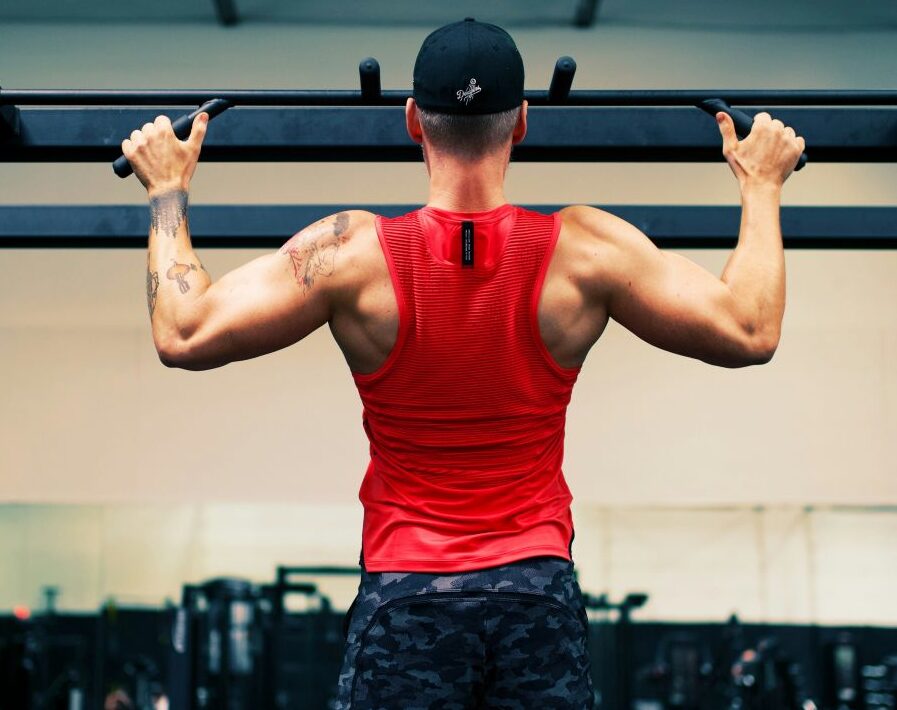
This post is designed to help readers improve pull ups. If we take time to do pull ups in different positions and at varying rates of speed and force, we will improve our overall strength and form. Similarly, we are wise to give ourselves more chances to learn pull ups by doing them more often throughout the day. Learn to build, test, and take breaks.
Pull Ups
The pull up is a fundamental workout that teaches you how to control your whole body across a movement. Pull ups are a pillar of bodyweight strength and immensely satisfying to complete (as well as intense and potentially demoralizing). In this post, I will outline pull up basics and identify techniques you can employ to improve your pull ups.
Whenever I see people asking for fitness advice online, I always run into posts where someone is asking for someone else to check their form or teach them how to do more pull ups. I decided to write this so that you can take autonomy over you body and better learn how to learn about movement.
Pull ups develop with practice and consistency, and that alone can get you to your pull up goal. However, if you want a guide that helps you build pull up confidence and control, continue reading below.
What are Pull Ups?
Pull ups are an essential upper-body bodyweight exercise where you use your arms to lift your body up off the ground to a set point. This exercise involves hanging from a bar with your palms facing away from you and pulling upward toward the bar (not to be confused with chin ups, where your palms face toward your body, ‘demonstrated’ above by our Secretary of War, Pete Hegseth). Pull ups are both great for learning and difficult to master because they require a bunch of our muscles to work together in order to perfect the form.
Pull ups work best when you take time to learn the primary muscles involved in the movement. For me, this doesn’t mean learning muscle names and locations; rather, it’s about developing a better understanding of how your body can control itself along the movement.
For those of you who remember the survivalist Les Stroud, famous from his aptly-named show “Survivorman”, he offers great advice that’s applicable here: if you want to improve your working knowledge in a subject, learn traits and characteristics rather than names so that you can more effectively utilize the information when in need. (The idea being it’s more helpful to be able to identify healing plant families and types of plants that serve as foods rather than knowing their scientific names. Anyone remember the episode? I think it was the Alaska or Northern Canada one, but I’m not sure).
How to Do a Pull Up
Proper pull ups can be hard to define because they’re often cheated in the pursuit of more reps. While it’s tempting to limit your range of motion or use momentum to get yourself over the bar, neither of these tactics will help you get stronger along your full range of motion.
If you want to do a proper pull up, follow these steps:
- Locate a stable pull up bar (ideally, one where you can hang without your feet touching the ground)
- Grab the bar with both palms facing away from you, gripping the bar with your hands slightly wider than shoulder width apart.
- Start from a dead hang, where your body is not pre-tensed
- Tense your whole body—from core to toes—to maximize your power and control
- Begin the pull by retracting your back and conducting a scapular raise
- Pull your body upward until your chin is above the bar
- I like to place an active emphasis on my biceps at this phase, activating them by pulling my elbows inward while beginning the initial pull up. I find that I get a better initial pull and more power overall
- Lower yourself in a controlled fashion until you return to dead hang
These steps will get you to your first clean pull up. To improve your pull ups and work toward more advanced skills, consider the steps below.
How to Improve Your Pull Up
Step 1: Practice Hanging on the Bar
You will better understand pull ups by spending more time hanging on a bar. While it may seem like hanging on a bar is just a matter of grip strength, it can be an excellent strategy to develop cross body tension and control if approached with that intent.
An active hang on a pull-up bar forces us to use all of our muscles to suspend our bodies. Instead of flopping around and blowing in the breeze, we are holding our bodies tight from head to toe, teaching our muscles how to collaborate to best keep us suspended.
Time spent hanging on a pull up bar helps teach us which muscles we need to use to complete the end range of the pull up motion. As grip strength improves, we will notice how tension builds across our backs, along our lats, and in our core and legs to keep us stable. This tension adds power and control to our pull ups and improves full-body control.
Step 2: Try Different Positions While Hanging
Once you’ve gotten the hang of hanging straight down on the bar, you can start building in movement to your hangs. Try shifting weight from one arm to the other and see how your body responds. Move your legs around, and watch how the pressure shifts around on your shoulders and biceps. Build in scapula raises to get a sense of how your back is involved in the pull up process. If you’re feeling confident, try pulling your legs into a L-Sit from a dead hang and note how your upper body responds.
Pay attention to how your body feels when you move around, and look out for weak points. The more opportunities we provide our body to learn which muscles are needed for a given movement, the more stable we will become, leading to, in this case, better pull ups.
The bodyweight hang is a crucial first and last step for every pull up, and the more information and variation we can give our bodies about the end hang, the better we can control our pull ups.
Step 3: Vary Pull Up Speed and Force
Along with changing body positions while hanging, you can improve your pull ups by varying the speed and force of your sets.
Spend some time trying to pull your chest through the bar like you’re going to body check the bar into next week. Similarly, mix in slow, controlled movements that make you feel each muscle fiber as it activates and earn each millimeter of movement. We aren’t always going for the max number of reps, and different pulls provide different bits of learning.
When we change how we pull up, we provide our body more ways to learn. If we keep it up, we will be able to translate these lessons across our pull ups and do more better ones each time.
Step 4: Increase Pull Up Frequency
Most importantly, mix pull up practice into your day to build your pull up skill and power. The more opportunities we give ourselves to study pull up positions, test repetitions, and build strength, the more likely we will be able to improve our pull ups.
Key to developing pull ups is regular movement paired with thoughtful breaks. Our bodies like to learn by doing, but they also need time off to build and recover. Pay attention to how you feel, and build when you discover new ways your body is working toward the pull.
Step 5: Consider Adding Weight
If your goal is to have the most explosive pull ups, or progress onto more advanced techniques like muscle ups or one-armed pull ups, you may want to consider weighted pull ups.*
Adding weight to your pull up practice forces your body to understand which muscles are involved and recruit any available muscle toward completing the objective. Instead of increasing repetitions or time under tension, adding weight requires you to pull more with each repetition.
Weighted pull ups incentivize your body to build more muscle, making bodyweight pull ups easier with practice. However, do not forego bodyweight pull-ups for weighted pull ups, as bodyweight mastery is the goal. Furthermore, bodyweight offers different avenues to progress your muscle control, such as typewriter pull ups or archer pull ups, which should be considered in conjunction with any pull up development plan.
*Note: I learned to do muscle ups and one-armed pull ups without adding any weight. I found that there was ample strength building to be had through body-weight movements and wanted my mastery to be of my own bodyweight. However, I’ve added weight in the past and know some people swear by it, so I want to put it on your radar.
Step 6: Diversify Your Pull Ups
Not all pull ups are created equal. Changing your pull up range, technique, and form all contribute to your body awareness and pull ups technique, allowing you to build toward more and better pull ups.
Once you get the hang of basic pull ups, try tinkering with how you do them to address any weak points and progress to more advanced skills.
For example, instead of stopping with your chin above the bar, work to touch your chest to the bar. Similarly, slow your ascent and descent to increase time under tension and refine your understanding of the muscles involved in the movement.
If you want to develop unilateral strength (and further improve your power), consider working on Archer pull ups. This variation places more emphasis on one side, allowing you to develop your power and one-arm control. It can also be modified to the typewriter pull up, offering you another way to progress.
Once you get these progressions down, the next steps really are muscle ups and one-armed pull ups. If you want further guidance or video demonstrations on either of these feats, reach out and I would be happy to help.
Conclusion
The pull up is an excellent workout to develop upper body strength, mobility and control. It can be tempting to push for the highest number of pull ups possible, but like most things, pull ups are better when trained for quality over quantity.
Take your time and study how your body feels when you hang on the bar. Try to get a sense of which muscles are being activated and which could use some training
Our bodies are unique bundles of tools that can accomplish amazing athletic feats, and time spent learning what’s there will make us better at whatever we seek to do. If you spend a little time studying your pull up, you will get stronger and more in tune with your body. The best part is, each pull up will be a good one, and you’ll be able to understand why.
Good luck! Let me know if you have any comments or suggestions.
-G
Does this post interest you? If so, consider reading more at The Pitch to see what EfficientlyELITE is all about!