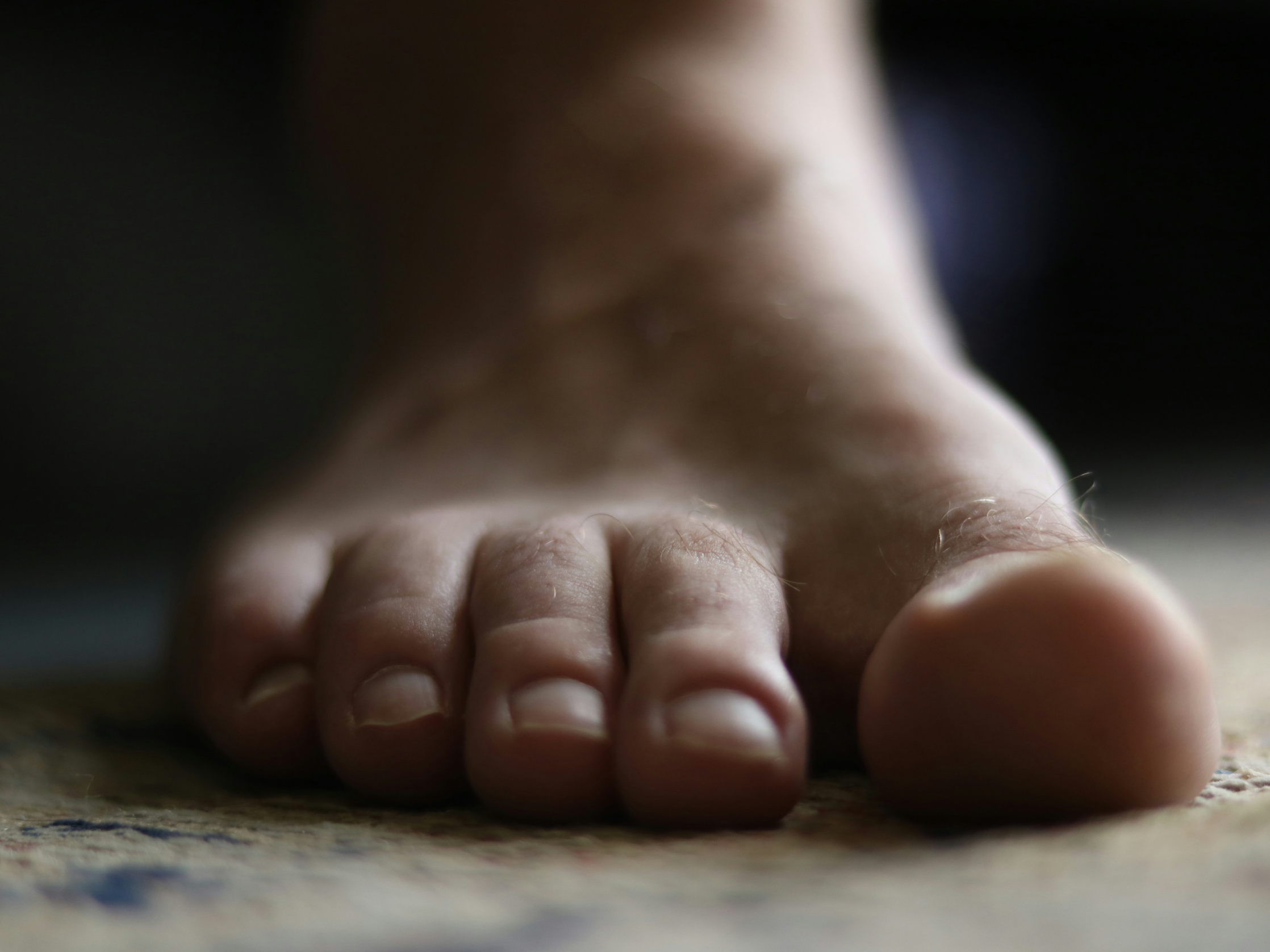
This post argues that toe spacers are not a long-term effective foot development remedy. Our feet are restricted by modern footwear, limiting how they spread and interact with the ground. Toe spacers try to address this by passively pushing our toes outward into a more neutral position, but they end up supporting our toes and restricting their ranges of motion rather than teaching healthy movement. To best build strong feet and toes, we must provide them diverse opportunities to explore their full ranges of motion and work on building muscles that let them move from one position to the next.
Free the Feet
Feet are master tools for locomotion. Our feet walk us through this world, granting access to motions like jumping, skipping, and anything you can think of while upright. In order to most effectively move, we need to be able to power our feet and toes throughout their ranges of motion.
A big problem comes from footwear. Shoes, which serve a valuable tool for feet protectors, have developed with aesthetic and antiquated utilitarian styles that restrict foot and toe movement. These bundle feet together so the toes cannot express themselves, leading to inefficient gaits and weaker muscles throughout our chains of power (for a guide on picking good sneakers, click here).
A popular modern remedy we see is the use of toe spacers. Toe spacers work to insert some foam or gel object into the gaps between our toes to force them to spread (or splay, as it’s commonly described). These can be useful tools for developing how you understand foot movement and where your toes should naturally spread.
However, like many of our shoes, toe spacers restrict the natural range of motion of our feet and passively move our toes into a subsection of their range of motion. This limits their development of muscular control and our overall understanding of how our feet work. Our toes are meant to be able to spread themselves and pull themselves together through their own power. Additionally, toes are meant to be able to push through things and resist forces against them, which they cannot do if toe spacers are blocking their inward movement or tight shoes are blocking their outward movement.
Our feet control how we interact with the ground. We want to keep them safe and durable, and it is not in our interest to excessively restrict how they move.
What are Toe Spacers?
Toe spacers are objects placed on a user’s foot that are designed to naturally spread and align the toes. These spacers are often made of foams or gel materials that allow them to be flexibly wriggled between toes and provide structure for toes in a more neutral toe position.
Toe spacers are often meant to be worn under shoes, acting as a support and counteracting the restrictive forms we often experience in our sneakers.
I find that toe spacers work like scaffolding for our feet, temporarily providing structure so that people can learn natural foot positioning.
Why Do People Use Toe Spacers?
There are a few reasons why we might consider using toe spacers, including:
- Discomfort from overly-restrictive shoes;
- Recommendations from a foot professional or friend;
- Foot pain/discomfort walking or running; and/or
- Desire to better learn how our feet work.
Most commonly, I see people adopt toe spacers because they’re generally active and were recommended content that advertises the merits of toe spacers.
Toe Spacers Target a Genuine Problem
For much of modern life, we restrict our feet to suboptimal positions. Tight sneakers, high heels, and unstable soles limit how we develop our foot knowledge and musculature, often resulting in and exacerbating many common foot issues like bunions or hammer toes.
Toe spacers present a rational solution to the issue of restrictive footwear. We so often press our feet and toes together, limiting their outer ranges of motion. Why not make a product that pushes them out into these restricted ranges of motion and into positions they should be able to use?
Simply put, we suffer because we cram our feet into weird shapes, and these products try to open them back up and push things out where they should be able to go.
Toe Spacers are Easily-Accessible Tools
Toe spacers are generally fairly inexpensive products given that they are usually a solid piece of plastic/foam/gel (though they can be $65 plus depending on expert associations, market differentiation, and branding), making them an easy add on to our fitness tool inventory. Their low cost of construction makes them easy to replicate and duplicate, ensuring plenty of inexpensive iterations available.
With all of the crazy and expensive fitness tools and shams available, toe spacers feel like an innocuous way to learn something new about fitness and potentially improve foot health and comfort.
What’s Wrong with Toe Spacers?
As previously mentioned, toe spacers push our toes out into positions they normally don’t go because of restrictive footwear. These tools prop our toes out so they aren’t crammed together and so they can feel where they are supposed to be able to go.
While toe spacers can be useful to help our feet learn where they can go, what we really want is to learn to power our feet so that we can spread our toes and pull them together as needed.
Toe spacers aren’t effective for developing long-term foot control and power because they passively push our feet into a range of motion rather than having the feet develop the ability to get themselves into the range of motion.
Our toes benefit from being able to explore their ranges of motion under their own power. Our toes can spread out, move in, curl, and resist being pushed into other directions while in any of these positions. When we are in tight shoes, we can’t spread out our toes. Similarly, when we have toe spacers, we cannot bring our toes all the way together because of the restrictive spacer in between. This obstruction props our toes into a position, limiting our ability to learn how to hold our toes out there and steadily control their movement.
Like the rest of our bodies, our feet can control a variety of muscles at once. While pulling themselves outward, our toes can control muscles that both pull themselves outward and restrict forces from pushing them beyond where they plan to go.
An Example to Try:
Take your pinky finger. I don’t care which one, you choose.
First off, feel how it can move. You can take your pinky and, with your palm flat on a table, lift the pinky up, pull it outward, pull it toward your ring finger, and push it into the table. Pretty standard, right?
Now, lift your hand off the table and have it out in front of you with your palm up. Take your pinky finger and move it outward (away from your other fingers). While doing so, take your other hand and try and move the pinky finger around. Even though your primary goal is to pull your pinky outward, you can also control it and prevent it from being pushed farther outward by your other hand. You can also continue to move it outward while preventing it from being pushed forward (into a curled position) or being pushed backward toward the back of your hand.
The same can be done with your toes, and you will have a much better understanding of how they work if you try and practice this control.
What Should We Do Instead?
As mentioned, toe spacers can be useful tools for understanding where you toes can go and what it feels like when they are spread out. However, the most helpful thing to do is to learn how it feels when you move your toes in a variety of positions. We can best learn how our toes move through providing a variety of inputs and exposing them to different ranges of motion. With that, here is how I develop my foot control and toe strength:
- I practice moving my toes around (good guide here)
- Without shoes, I practice spreading my toes out and bringing them back together.
- I practice curling my toes, stretching my tibialis and developing strength in a curled range of motion.
- I practice stretching the big toe upward, working on first it’s ability to hold an upward position with the wall support while my other toes are off the wall and then building the strength to pull it upward more, eventually working to be able to do it without wall support.
- I practice resisting having my toes pushed into various directions.
- I practice barefoot movements, including walking, running, jumping, and jump rope.
- I utilize fingers-between-toes stretches, giving me the learning experience of toe spacers without buying a product and avoiding use of a brace under my shoes every time I walk.
Conclusion
Our feet our powerful tools that allow for vast arrays of movement. These tools help us control how we interact with the landscapes around us, allowing us to walk, run, and jump through the world.
Our feet are most effective when we know how to use them. This is especially true when to comes to the fine-movement makers that are our toes.
For years, aesthetic footwear has restricted our ability to utilize our feet and toes. Instead of being able to control exactly how we push off the ground and build our base, we have forced our toes to work as blunt navigational tools, both hindering muscular development and restricting our abilities to move safely.
Toe spacers have emerged as a tool to show where our toes can go and educate us about natural movement. These tools can be helpful to better understand where the toes should naturally go, but they can also passively support our foot structure and limit how we understand our feet.
If toe spacers help you, great. The goal at the end of the day is to improve how our bodies work. However, we must pay attention to how our toes can move themselves out, in, up and down, especially when other forces are being applied, if we want to best understand how to control them. Our feet dictate how we interact with the ground, and it is crucial we teach them well so we can keep moving throughout our lives.
Thoughts, questions, or counterarguments? Let me know!
-G
If this post interests you, consider reading The Pitch to see what EfficientlyELITE is all about!