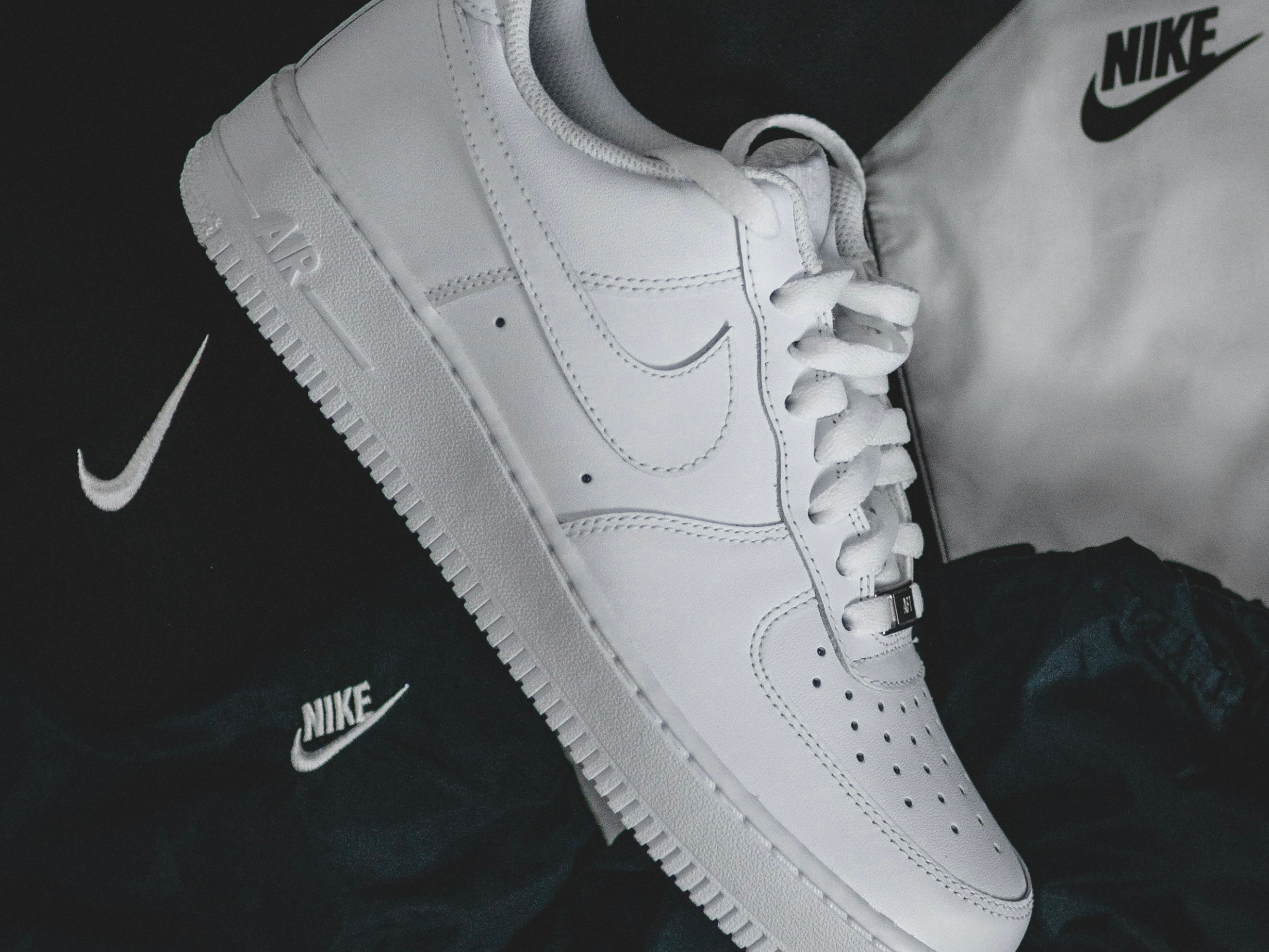
Nike is a leader in all things fitness. They make sneakers for just about every sport and sell over 800 million pairs each year. Why does the self proclaimed “world’s leading designer, marketer and distributor of authentic athletic footwear” not make shoes that properly fit our feet? They’ve tried in the past, but that’s not enough. Nike barefoot sneakers- especially lifestyle sneakers- would set good foundations for present athletes and all those to come.
Got Any Toes?
In 2016, GQ determined that Nike sold 25 pairs of sneakers every second.
To be clear, this article was approximating Nike’s sneaker sales based on its earnings report, more so commenting on the company’s scale than providing an accurate reflection of their production rates. However, if it needed to be said: Nike makes a TON of shoes.
When we look at shoe-market data from sites like RunRepeat, Nike’s sneaker stranglehold becomes more apparent. According to them, Nike accounts for 38.5% of the global sneaker market. Not a majority stake, per se, but Nike’s market dominance cannot be contested. It’s a universal truth that the cool kids wear Nike’s.
Why does a brand so deliberately intertwined with athletics and sports culture not create shoes that allow feet to effectively function?
Nike sits atop a throne of athleisure, yet won’t wiggle a toe to help the millions of people cramming their shoes on learn how their feet work.
We have toes. The longer market leaders deny it, the more it will take for our young athletes to understand how their bodies work.
Uneasy Lies the Head that Wears a Crown
To shake my fist at Nike without considering competitive markets would be close-minded.
Nike, as with all shoemakers, exists in an incredibly competitive market. Nearly everyone wears shoes1 and a good pair of sneakers wears out around 300-500 miles,2 so there’s always a need for new footwear. This demand grows alongside population.

Sneakers exist in a particularly difficult market because their sales are heavily controlled by both style and innovation. New shapes and technologies can drive sales one way, and a celebrity partnership might quickly take the market somewhere else. Brands rise and fall based on how the public perceives their style and swagger.
New shoes often enter the market through funky shapes or designs (consider Zigs, Shox, or the hilariously-deceptive Sketcher Shape-Ups) purporting health benefits or a look that will shock your friends, and a long-standing king can easily be dethroned if their new styles don’t hit the market.
Nike has long-known the style-to-sneaker-sale system, and sits comfortably at the helm of a $100 billion market.
1Though there are communities of people living barefoot lifestyles, even in modern urban environments. Consider the Society for Barefoot Living (to which I have no relation).
2Sneakers have a fascinating market presence because they are relatively durable in the sense that a good pair can last you years— making them something you can justify spending a premium on— but their very nature as protectors of feet from the outside elements makes them naturally consumable and bound for replacement.
Big Dog’s Gotta Teach
Nike fails its fans and customers by not using its influence to improve how people use and understand feet.
People in leadership positions occupy a particular role of responsibility. Their control, influence, and scale must consider how it guides all other market participants and influences the consumer. They have superior information, bargaining powers, and reach. In the case of Nike, their leadership position influences how people move every single day of their lives.
Nike is so large and important in the consumer sneaker market that it controls what people look for in sneakers. It has shown this many times through creating fads for sneakers with air pockets at the heel, springs, platforms and anything else one might imagine strapped to their soles. This control is helpful for setting trends and bringing in profits, but it also creates a burden to teach people how to operate their feet.
Nike is a $100+ billion company, 2/3 of which is due to their sneakers. They have sport research labs, innovation labs, and countless professionals working to design, promote, and sell their shoes.
Nike recognizes how feet are shaped, and knows that their standard shoe profile (especially that of their lifestyle shoes like these) is a relic of past beauty standards. By failing to create shoes that properly fit our feet and avoiding educating people about how their feet work, Nike is using its disparate knowledge selfishly and at the cost of our precious movement.
Should we not hold our specialists responsible for putting out safe products, especially when these products directly impact something as important as basic movement?
Nike’s Nominal Past Efforts
To say Nike has not tried to make some iteration of barefoot shoes in the past would be unfair. After all, Nike took the market by storm in 2004 with the first release of its Nike Free line. This Free line, while certainly an attempt to teach people to use their feet, prioritized shoe-style drama rather than utility.
Nike has introduced several minimalist/barefoot styles over the decades, including the sock racer, the split-toe Air Rift (now partnered with Kim Kardashian’s Skims), and the aforementioned Free line.
Instead of focusing on major barefoot shoe facets like a wide toe box or zero drop, Nike pushes the bounds of both function and style, resulting in slipper sneakers and soles that looked as though they went through a french fry press.
These shoes provide for a nice fad (and, in the case of the sock racer, a Boston Marathon Victory), but if you take a look at their pages now, you’ll see that the once-popular lines have largely disappeared (that is, until the Air Rift was picked up by Kim Kardashian).
Nike: barefoot shoes are out there and selling nicely. Look at Vivobarefoot, Lems, and Xero Shoes. If we want to see wide-scale adoption, we need Nike to take up the torch themselves.
To see how Nike can make barefoot shoes the norm, let’s first consider why past efforts have failed.
Why Nike’s Past Barefoot Shoes Have Failed
Nike is intimately familiar with the style-function tension central to the survival of any footwear line. Color changes, fabric choices, and debut styles can make the difference between a new style surge and a flop flooding discount stores.
Trends to Grow Shape Changes
In the case of major functional changes, Nike tends double down with equally-dramatic style shifts. These style shifts promote sales booms by setting the standard for new and exciting footwear, but they also date the footwear, leading to abandonment for the next style.
For example, when Nike’s Free line came out, they were introduced in wild colors emphasizing their unique shape and function. Commercials would feature twisted sneakers in a blazing red, debuting the hot market drops.
Every single kid wanted a pair of these shoes. Schools would fill with Nike Free’s, as every kid wanted to experience the revolution of new movement technology (and be in style).
Trends to Kill Shape Changes
After a while, the trend would set in, and people would recognize that their red hot shoes are actually fairly strange looking. I get a little embarrassed when I look at my old Nike Free Flyknit sneakers, and I imagine I’d feel the same with the Sock Racers or Air Rifts. As the trend sits in, the market asks whether it should grow, stay, or be replaced.
When presented with a fading fad, Nike then faces a few choices: push the boundaries further, with crazier colors and/or gimmicks, tone down the sneakers for more casual usage, or let them fade. In the Nike Free’s world, each option was utilized.
By developing natural-movement footwear through boom and bust fad sales, Nike limited the promulgation of foot-developing footwear across multiple generations and formats. Additionally, it created an all-or-nothing adoption style, promoting improper integration of barefoot footwear and dissuading customers from their continued use.
Footwear needs to reflect how our feet move. Nike, with its market influence, presence, and control, is in the best position to Just Do It.
Why Nike Must ‘Just Do It’ and Make Barefoot Sneakers
Nike is the only footwear company who can create a lasting, large-scale shift toward barefoot sneakers. It has the scale, influence, and global reach to effect lasting changes that will improve footwear forever. The biggest reason for this is simple:
Regardless of the research you put in front of them, most people will not change their behaviors unless a leader in the area tells them why they need to.
Change is hard. It requires a deliberate effort to do something new, and often comes at the cost of being different. Often, it’s easier to stick with something that is known to be wrong but popular than it is to change.
This is what limits barefoot sneakers.
Barefoot sneaker brands can demonstrate foot health benefits, fashionable wide toe-box models, and sustainable products development at marketable price points, but they struggle to influence like their behemoth competitors.
Currently, the Barefoot Sneaker market is valued around $550 Million Dollars, or ~0.5% of the sneaker market. Sneaker brands focusing directly on this niche have to change consumer sentiment despite a minisucle market presence.
It’s working for the intensely health-conscious, but the same can’t be said for the average consumer.
The Typical Consumer Needs Leader Guidance
A normal footwear buyer isn’t researching how their biomechanics will be impacted by their shoe choice. The typical shoe store doesn’t discuss toe splay or how a heel-to-toe drop impacts gait mechanics.
Even if you go to a specialist run store, you are often only given readings on inaccurate treadmill-style systems which are analyzed by college track students. The information can be helpful, but it certainly isn’t the guiding light most seek when making major changes.
When an average consumer goes into the sneaker store, they look at the popular brands and price points. Depending on their goal, they might add some more cushion, as that’s generally advertised as the way to reduce foot pain (instead of actually improving foot mechanics and how our feet interact with the ground). This puts them in major sneaker lines like Nike or Adidas, and fits their toes into the antiquated narrow-toe design.
One leader to come in, promote foot movement, and offer everyday shoes with the promoted benefits is all it would take to get an average consumer to give it a try.
Even More Guidance is Necessary for Young Audiences
Being different is one thing for an established adult who isn’t worried about choosing function over form, but it is a completely different game for the young impressionable minds most in need of foot education.
Kids, especially those in the middle school to high school age ranges, are interesting market participants in the sneaker realm for two reasons: they are hyper-fixated on trends and they are less price fixed than adults because their parents often pay the bill.
Not only are kids more easily influenced by sneaker style trends, they are also more likely to suffer from inefficient designs. Children are children because they are still growing. This growth impacts how their future form functions, making it critical that they are able to develop proper musculature and foot form at a young age.
This creates an even greater need for Nike to make barefoot sneakers. Nike voices footwear style for most major athletes. Children look up to these athletes, and want to emulate them whenever possible. Similarly, Nike pairs with influencers, content creators, business leaders, and artists, placing their kicks on most of the major market movers.
If we want more kids to develop strong feet, we need to put appropriately-shaped shoes around them. Nike is the best company to lead the charge, and they should look beyond the sports field.
Nike Must Grow Barefoot Shoes Through Lifestyle Sneakers
While many people are passionate about sports and interested in sportswear, more still are interested in footwear for everyday life. After all, we may go on the field a few times a week, but we walk around every single day.
Movement is central to everyday life. Most of us need to walk to handle even the basic chores around us, and that walking generally demands the use of footwear.
If we want people to learn to walk better, we need to teach them when they are most often doing it. Despite walking being one of the most common movements we make, sneaker makers like Nike tend to design lifestyle shoes with no regard for how feet actually work.
Popular sneakers like the Killshot II’s are designed with excellent durability, style, and price points, yet they cram the toes so tightly together that people never learn to articulate them properly.
Designing day-to-day sneakers with natural movement in mind helps us develop our natural musculature, educate ourselves on how we should move, and prepare for this movement as we need it. Integration of barefoot principles into everyday footwear will provide the education necessary to making them stick.
Integrating Barefoot into Lifestyle Sneakers Promotes Education
Nike’s Free line demonstrated a useful learning tool that fizzled out due to lack of proper education.
With the Nike Free line, athletes became more able to articulate their feet with sneakers on, allowing for wider ranges of motion. This is incredibly useful because our feet can only learn to control movement when they are able to enter into the range of motion.
However, trouble arises when we go from restricted footwear right into barefoot movement.
When we use hyper-restrictive sneakers, our feet are limited in a wide array of movements. A large heel-to-toe drop causes us to strike our heel first. This heel strike rolls into our arch, which is artificially maintained by a pad cupping a shape the shoe designer deemed appropriate. From the propped arch we are then expected to push through the balls of our feet, of course disregarding the toes which have been crammed together by overly-restrictive toe boxes.
That’s how most shoes set up our gait mechanics. With such restriction, we only develop part of our foot control and ability to move.
So often, we see advertisements for new motion-maximizing shoes, pushing us to transition right into them. When we make the switch, we try to maintain our old paces and distances, not recognizing how the previously never trained muscles will be forced to face brutal opening days. From here, we find ourselves overexerting untrained muscles and injuring ourselves, resulting in a blaming of the footwear as opposed to our own training.
Once people better understand how their feet work and see the benefits from barefoot sneakers, Nike’s profits from the additions will soar.
Nike Will Profit From Barefoot Sneakers
Nike already exists as a pillar of the sportswear market. When they put out a sneaker, people listen and purchase accordingly. This is true across both their athletic and lifestyle models.
Regardless of science, research or trends, people will stick with Nike simply because of what Nike is. Their swoosh means so much that people collect hundreds of pairs, limited drops, and the funkiest of funky designs (look at any sneaker subreddit to see what I mean).
If Nike produces barefoot sneakers, people will buy. If Nike convinces people that barefoot sneakers are better for them, users of their existing shoes will likely try the barefoot models, promoting mass repurchasing and creating new customers of existing owners.
It’s easy to see why I find Nike’s transition to barefoot sneakers to be necessary, so let’s consider why they have not made the change already.
Why Nike Does Not Already Prioritize Barefoot Shoes
Nike is a leader in the sneaker market, pumping out new shoes, styles, and color ways each day. Despite this market presence and the countless new iterations, they rarely approach the barefoot market. Here’s why:
Nike is Already On Top
Nike currently controls which sneakers are cool. Their popular styles sell well with mass-market variants, and limited drops can range in the thousands of dollars.
With such a confident market position, Nike does not have a large incentive to shift to sneakers with barefoot properties and wider toe boxes. These changes add risk to a successful business model that profits from color changes alone.
At such a large scale already, Nike may simply want to avoid knocking the success it has of track.
Costs Associated with Change
Monetary
Changing to barefoot sole designs would present a significant cost to Nike. In order for Nike to shift to barefoot-style sneakers, it would have to create new molds and standard shapes for its shoes. Not only would it have to change the shapes and machines, it would also have to do so at an international scale.
Yes, Nike could drop these shoes in limited geographic markets or quantities, but if the goal is to promote widespread foot health and shoe change, it will need large scale output.
The barefoot market itself currently casts doubt on whether the large scale output needed could be confidently sold off. As previously mentioned, the barefoot shoe market sits a less than a percent of the global sneaker market. Nike may view their redesign and launch costs at a level that the available market could not support.
Social
Beyond monetary costs with redesigning manufacturing and launching at scale, Nike would incur substantial social costs.
Nike is well-known and admired for its shoe styles. These styles revolve around a narrow profile and consistent shapes. If Nike deviated, it would face backlash from collectors, writers, and anyone who feels like hopping in to deliver a blow.
They would also be doubted for the legitimacy of their shift, with plenty of opponents willing to say that they hopped on the barefoot bandwagon as a sign of weakness and doubt of their own styles. This could impact consumer confidence, causing prices and sales to shudder.
Inertia
Sneakers have an extensive history, much of which has revolved around narrow toe boxes with a heel.
At its current scale, Nike is a battleship in the shoe market. It has chugged along with its shoe design for decades, adding flashes to the pan but largely sticking true to its narrow toe shape.
The sheer amount of time invested in the typical narrow toe box makes a change to something wider daunting for someone like Nike.
Counter Arguments:
Nike does have a successful business that thrives with its current shapes. However, it is a market leader that can influence people toward new shapes, styles and technologies. While the shift to barefoot shoes would be difficult, Nike has several factors in its favor:
Nike Creates Momentum and Dictates Footwear Fashion
As previously discussed, Nike is a prime example of a company that influences masses and directs their wallets. It partners with athletes, celebrities, and regular people to make its sneakers cool, accessible, and stylish.
If anyone can shift people to barefoot footwear, it’s Nike.
Barefoot Footwear Fits Nike’s Style
This shift from narrow toe boxes to barefoot sneakers would neatly align with everything Nike stands for.
Nike presents itself as the fearless leader in a world waiting to get things done better. It emphasizes technological development and education as key factors pushing innovation.
A shift toward barefoot sneakers would represent a bold transition for good. Nike could frame the shift as recognition that we can improve how our feet work and build stronger bases. It can market away any issues with its past toe box setups and keep pushing forward in its drive for change.
The Barefoot Sneaker Market is Growing
While only a fraction of the size of Nike, the barefoot sneaker market is one that is rapidly growing, especially among the studious and athletic youth Nike seeks to target.
Just look at all the brands out there. If you go to any local gym, you’ll see Xero shoes, Lems, and Vivobarefoot sneakers steadily present and becoming more recognizable. New brands pop up each week, pushing more away from the ancient pillars like Nike.
The small barefoot market is only sized as it is because it is controlled by offshoot competitors sick to the mainstay shapes. These brands grow in local stores and specialist communities, limiting their market visibility.
The market would be completely different the second Nike stepped in.
Nike is in The Best Position to Develop Barefoot Sneaker Scale
While it is a large company that would have to pay a lot to make barefoot sneakers ubiquitous, Nike is in the best position to do so efficiently.
Currently, Nike is a market leader for sneakers. Its position of scale provides efficiencies when shifting to new product styles or models. It has the best raw material prices, and it has more machines than anyone else.
In short, Nike can produce barefoot models more effectively than the newer brands because it is bigger and has expansive market connections.
Conclusion
I love Nike sneakers, and have since I got my first pair of Shox in elementary school. I respect their quality, price, style, and ability to empower athletes throughout generations.
At the same time, I know they can be more.
Nike leads the shoe market, and should use this power to make footwear better. Nike has a responsibility to all the athletes it pays, controls, and influences, and should use its superior position to put people in better footwear.
Footwear exists in a fickle market influenced as much (if not more) by styles as it is by technology. If we want to change minds, we need the style leaders to show us why and how.
We have toes and need to learn to use them. Nike’s the best resource to get us there.
Thoughts, questions or comments? Let me know!
-G
If this post interests you, consider reading The Pitch to see what EfficientlyELITE is all about!