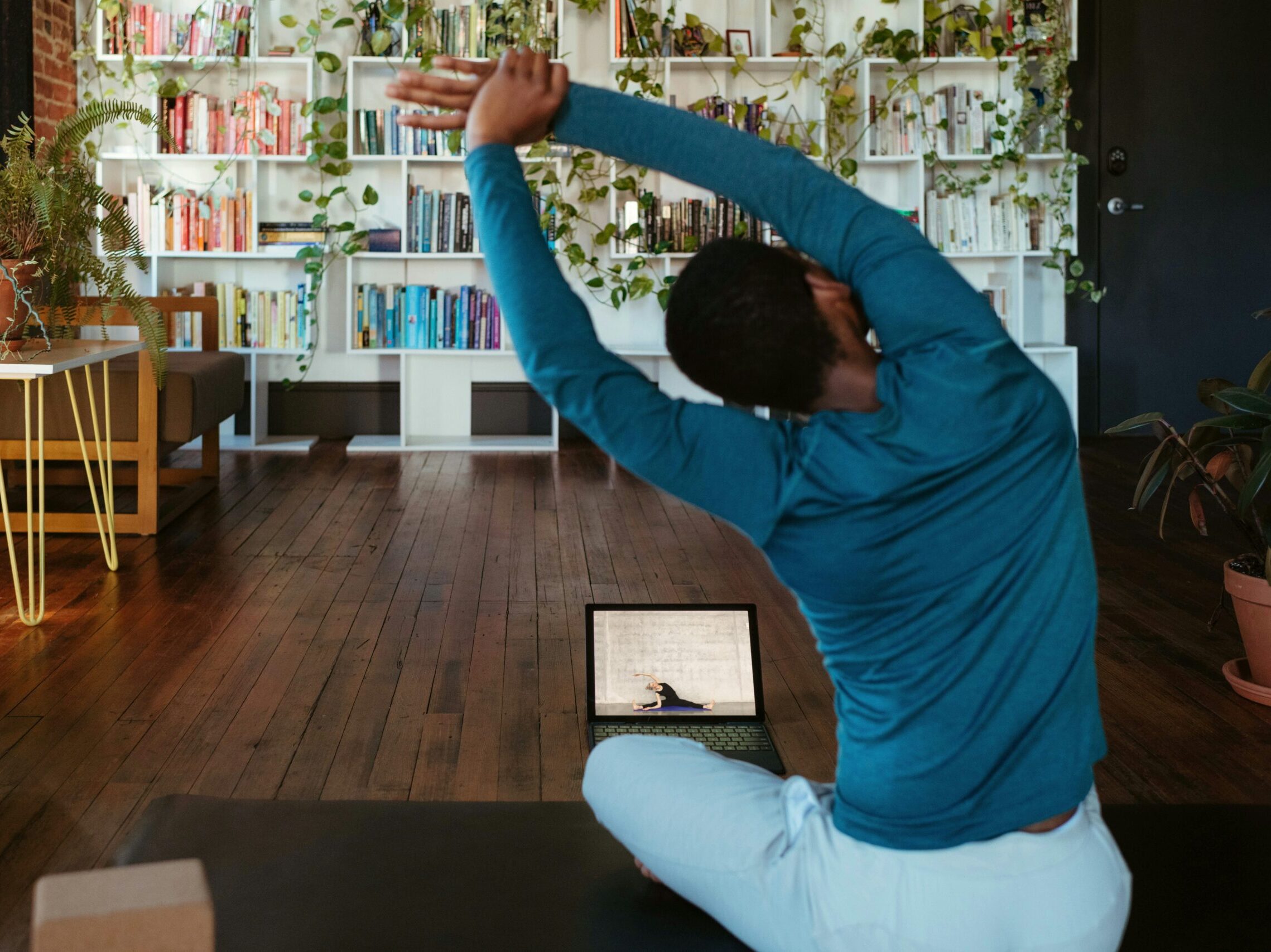
Workout information is everywhere, yet obesity continues to plague societies. If we can find good fitness information with ease, why aren’t we all fit? It turns out fitness is a mental game and must be treated as such. All the information in the world won’t make us fit if we don’t treat fitness as a priority in everyday life.
High-Quality Fitness Information is Everywhere
High quality workout information is available just about anywhere we look.
- Google “workout”, and you’ll have any type of exercise routine you can imagine at your fingertips.
- Check YouTube, and you can find an instructor with videos matching your desired intensity, duration, trainer gender, hair color, and background music.
- Scroll Instagram trying to avoid a workout, and you’ll be met with people teaching you the merits of a pull up vs. scapula raise.
Don’t even get me started on AI.
If workout information is so readily available, why haven’t we all taken hold of it and made ourselves fit? Why do we struggle to exercise everyday if someone online can show us a progression for any move we want to learn? How can we say it’s hard to do a workout if there’s someone willing to make workouts whatever length we request?
Fitness is a life-long pursuit that can always be improved upon. However, we tend to lose track of fitness in pursuit of short-term goals, pushing ourselves to be the best now rather than healthy forever. This often results in negative associations with fitness, or worse, injuries, which take us further from fitness and make it harder to pursue. Our goal should be to maintain a body that can keep us active for life. After all, who doesn’t want to be able to play catch with their grandchildren.
Our failure to become maintainably fit generally occurs because we tend to set the wrong fitness goals, seeking out short-term victories rather than long-term health.
We Restrict Fitness to the Short Term
We tend to look at fitness as something that we pursue in order to accomplish an objective in the immediate future, rather than the objective itself.
Do you want to get good at a sport? You’ll need fitness to be competitive.
Want to run fast? There’s fitness training for that.
The list goes on. Wherever we look, we’ve made tiny events that encourage people to put their active lives on the line to show how fit they are in that moment. Young adults are blowing out their knees putting the big race over an understanding of body mechanics, and pro athletes wilt into lame parents from career-ending injuries.
The problem with fitness as a tool to accomplish an objective rather than the objective itself is that it maligns our priorities, placing winning the event over having a good body that lasts. On top of that, since we only pursued fitness to accomplish that objective, once it’s done, our incentives to maintain fitness vanish.
Let’s say you didn’t go pro (I believed in you, too!).
You might ask yourself, “Why should I keep training?” A few weeks go by, and you’ve gotten out of shape. Negative associations pile on, and working out feels harder than ever.
It sounds silly, but that’s often what happens. The fact is that most people won’t go pro, but we all need fitness for a healthy and active lifetime.
‘Yes or No’ Fitness Makes it Easy to Find Excuses
On top of only seeing fitness as something to accomplish a short-term goal, we tend to consider it as a binary: either you’re fit or you’re not.
We see athletes and think: “those guys are fit, and I’m not,” and normalize the fact that we are not (and will not be) fit because we don’t do sports for work.
If you were to look at the athletes themselves, you would notice that there are wide ranges of available fitness, all customizable based on our needs, objectives, and priorities. Just as athletes have a range of fitness options, we too have the limitless ability to customize our own fitness.
However, instead of considering what type of fitness we might need and how hard we’d have to train to get there, we merely ask ourselves:
Do I Need Fitness? Yes or No.
If we’ve given ourself the chance to engage in fitness, it often comes from needing it to do something else.
If we make a sport team, we pursue fitness. As long as it’s successful, we will keep on the fitness train toward our objective. Lose once, and we have a negative association forever.
We see people lose their interest in fitness due to these short-term losses, setting themselves up for increased injury risk and lower mobility.
Fitness is often separated from everyday life as a temporary state of being used to accomplish something else. Each step of the way, we look for a reason to filter out regular fitness and open up our schedules to the rest of the world.
Objective Completed. Do I Still Need Fitness? Yes or No.
If you’re playing tag as a kid and keep becoming ‘it’, you may determine you’re not athletic or no good at the game, concluding you can stop and, therefore, can stop focusing on fitness. Maybe you make it a little farther, but decide to stop pursuing fitness after not making the varsity team.
We tend to let these little losses justify separating ourselves from fitness. We take the work of fitness off our plates because we only gave it value in relation to our short-term goal. If we think about trying to get back into fitness, we remember our short-term failures and fell that negative sting envelop the realm of fitness itself.
After a while, when all the sports are said and done, we ask ourselves:
Sports are Over. Is Fitness Still Worth It? Yes or No.
Whatever the reason, as soon as we stop pursuing fitness, we become negatively averse to it. It’s no longer an essential tool to pursue our passions, but a tiring, painful experience that shows us what we are no longer, making it the last thing we ever want to do.
The worst part:
If we are able to convince ourselves to get back into fitness, we tend to do so only for another short-term goal, setting ourselves up again for failure or injury.
Instead of pursuing fitness for life, we want to win the first workout back or burst into marathon training like the champion of the world, leading to overdoing the first workout back or piling on unsustainable miles. These results in unsustainable practices and horrible associations with the activities, causing us to break down and fall further away from a lifetime of fitness.
Fitness Exists Beyond the Short Term
We often see people lose fitness because it was only a short term tool for them. Once they’ve determined pro sports aren’t their path or that they won’t be the next Tony Hawk, they tend to disregard fitness. After all, why waste your time exercising if you’re just going to be working a 9-5?
Fitness is what allows us to move comfortably throughout our lives. When we are fit, we can more easily navigate our environments in a way that keeps us free from injury. The more fit we are, the more effectively we can engage with our families, in our communities, and with the things we enjoy.
It’s important that we train fitness with an aim to create a body that works well for our entire lives. Fitness for a sport or hobby is great, but it’s far more important to train our bodies for the long haul.
Fitness is A Mental Game
Life is busy, and we’re always looking for ways to justify spending time elsewhere. Fitness is often filed into the later bin because we feel its mental burden and tell ourselves we’ll get to it when time frees up.
Work, school, social lives all come into play. Interests, passions, and projects take time too. Even the ‘basic’ chores can fill up much of our day-to-day life. With all that in mind, it’s easy to see how fitness could be written off if it isn’t valued as a long-term benefit.
Let’s go back to youth sports us. We just missed the varsity team, and decide sports aren’t for us. From there, we decide we don’t need fitness. After all, no sports means no fitness.
Our tendency to pigeon hole fitness into something that’s only valuable as a tool to accomplish a feat or sport provides us infinite excuses to avoid making it a lifetime priority.
Instead of continuing fitness, we give up once we’re past the task or dream. We tend to get caught the world around us, prioritizing everything else above fitness.
It’s important to remember that fitness is more than sports, it’s how we navigate all aspects of life.
Fitness Applies to All Aspects of Life
Any action can be improved by thoughtful study of fitness.
Each time you walk around, you are relying on your body’s ability to move. When you pick up something from a shelf, you are relying on your body’s ability to control itself and your shoulder’s stability. Even though your daily life might not involve a gym, it certainly involves fitness.
When fitness is confined to an excess or activity that is only applicable to a short-term goal, we limit our body’s development. We most often consider our fitness when we are pushing ourselves to our limits to win a game or match, but this does not accurately reflect how we manage fitness.
Fitness helps us stay up with a clear head during a long day. It helps us walk to the nearest convenience store if our car breaks down. Fitness provides confidence when we enter a new social setting, so we know we are both physically safe and comfortable with our bodies.
Our pursuit of fitness should consider that we need to move for the rest of our lives. We will need to keep picking up packages, pushing lawn mowers, and walking up and down stairs. It’s important we build our bodies to continue to be able to do that.
Why Online Workout Information Alone Doesn’t Solve the Problem
The internet has been a fantastic place for the promulgation of fitness information. New exercises are constantly being documented, and fitness professionals are available with internet access.
Online workout information is great for developing exercise knowledge and concepts, but it struggles to improve our population’s fitness because it doesn’t combat the short-term mentality associated with exercise. It also tends to show the extremes of fitness (such as techniques for high-level athletes or strongmen), making the regular person feel that a life of fitness is unattainable.
When fitness is viewed as a tool for an athletic feat or sport, we may find ourselves thinking we’ve outgrown it as we age. It’s all too common to hear someone say they’re too old to need to workout, or that their body is just old and fitness doesn’t matter for them.
Once fitness is written off, even the best exercise information becomes irrelevant. When we see ourselves as past the point of needing fitness, we disregard the information created to make fitness easier and more effective.
In order to get people into fitness, we need a mentality shift.
Revaluing Fitness
Fitness governs how we interact with our environments. It dictates whether we can walk to the grocery store and impacts how long a walk we can take with our dog. Fitness controls how we maintain our homes, what hobbies we can enjoy, and how we can move without injury.
When we limit fitness to something we do to win a sport, we are no better than the phone company who designed their products with planned obsolescence. Despite our societal views of athletics as a young person’s activity, fitness is a lifetime pursuit. It must be viewed as something we continually build and work toward if we want to keep our bodies moving healthily.
We will best improve general fitness by shifting mentalities away from exercise serving as a tool to improve sport toward fitness as a basic maintenance requirement. Fitness is a lifetime necessity that keeps us moving as long as we live. Once we treat it as such, the expansive online workout world will become much more valuable.
Returning to Fitness
Recognizing fitness as a lifetime necessity also makes it easier to get back into fitness. I often hear people describe how they’ve gotten out of shape after years of avoiding exercise, emphasizing how it isn’t worth it for them to get back in shape, especially considering that they don’t play sports anymore.
Saying fitness is no longer worth it is a nearsighted excuse to avoid taking care of oneself.
Just because we have stopped pursuing fitness, it doesn’t mean we can’t get back on track and become fit. Any efforts to learn how our bodies work will make it easier to improve our bodies and make movement safer.
I find that returning to fitness involves a deliberate effort to understand why we are exercising. Do you want to be an active parent to your children? Do you want to one day play catch with your grandchildren? Fitness is what gives you that chance.
Fitness can be frustrating, so it’s important to understand what motivates us to move. From there, any basic movement to get our bodies can serve as a stimulus to get back into fitness. These basic movements can be built upon through your desired fitness platform (I will provide a good recommendation below). If you’re interested, I discuss tricks to getting back into fitness in further detail here.
A High-Quality Resource—DareBee
In your pursuit of fitness, you will find that there really is a ton of information out there. Good, bad, manipulative, fun, and boring fitness information can be accessed as quickly as you can Google it.
I have found that quality resources make fitness easier to pursue. One resource I have found highly effective is DareBee. DareBee is a website created by a variety of fitness professionals that is designed to make fitness more accessible. This site offers thousands of exercise and workout routine visuals designed to help you become more fit on your own terms.
DareBee utilizes fun visuals that show the user how to complete various exercises. They bundle exercises based on muscle group, intensity, technique, or anything else you might want. DareBee is very effective for learning individual exercises, combining exercises to create a full workout, and building longer term routines so that you can program workouts for an extended period.
I find that DareBee is a thoughtful resource that takes much of the mental burden out of creating an exercise routine or program. Their products are very welcoming and diverse, and make it easy to learn. They also have an extensive online community with thousands of posts and discussions. If you enjoy their information, they also occupy the healthy eating realm with their site DareBeets (Come on, DareBee and DareBeets? That’s pretty good, right?).
Check them out!
Conclusion
Quality workout information is available wherever we look, yet we still struggle to keep ourselves fit and manage our weight. Despite countless trainers, influencers, and guiding resources, we still tend to limit fitness to a youthful pursuit and look for outs wherever we can justify them.
Fitness suffers from a prioritization issue. We tend to limit fitness to sports or other short-term events, distorting how we train our bodies and creating incentives that only last while we pursue that activity.
Regardless of what sports we play, fitness is essential to living a happy active life. While it may be easy to say we don’t have to pursue fitness, it is critical to staying safe and active. If we want to be able to play catch with our grandkids one day, we have to continue studying fitness and build with an eye to the future.
Questions, thoughts, or other good resources? Let me know!
-G
If you found this post interesting, consider reading more at The Pitch to see what EfficientlyELITE is all about!