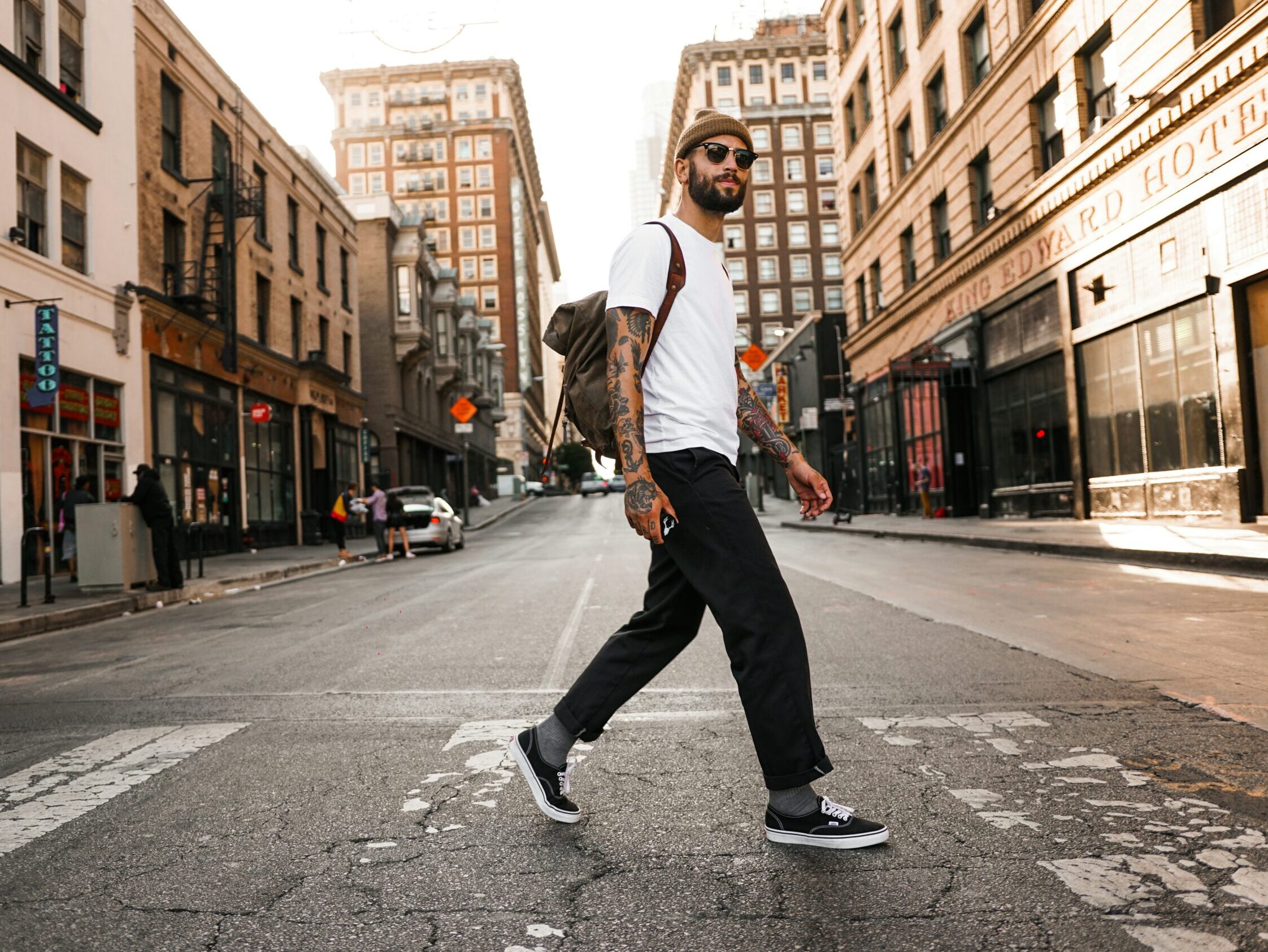
This post emphasizes the importance of studying how to move better in addition to traditional strength training. We often see recommendations for people to learn to lift more rather than take time to understand how they should move, leading to unnecessary injuries and ineffective body development. Lifting more is useful, but not when it comes at the cost of understanding effective movement.
Movement is Central to Everyday Life
From going to the grocery store to shooting hoops with friends, movement is imbedded into everyday life. We have an extensive ability to move, and our bodies can optimize for recurring movements and compensate for weaknesses. Our ability to move impacts how and to what extent we can interact with day-to-day activities.
Despite our wide array of movement options and ranges of motion, we rarely see advice beyond building strength across basic movements. Strength is important for health and everyday movement, but focusing on strength without taking time to learn how to move better results in restricted ranges of motion and unnecessary injury and delay.
Focusing on Strength is Important
Building strength is central to an effective body. Strength provides stability and control across our ranges of motion, and should be carefully studied in the pursuit of a stronger self.
At the center of most strength training guidance is core movement development, quantified by the number of repetitions we can complete with a given weight and acceptable form. When I say core movement, I refer to major movement patterns like the squat, bench press, or deadlift (for more on movement, consider reading HERE. For further workout discussion, check HERE).
The Issue
Most people forego full ranges of motion and effective movement in favor of increasing the weight they lift.
Strength training often runs into this prioritization issue, where lifting more weight is preferred to controlling how we can move. Squats are cut short, heels are placed in our shoes to compensate for limited ankle mobility, and braces and straps are applied to compensate for bodies ill-equipped to maneuver the weight we finagle around our bodies. Don’t even get me started on fashionable sneakers, which limit foot-developing stimuli and mold our feet into undesirable contortions.
The major movement patterns are important to study. We regularly squat, lift, and push throughout our day. However, we lose much of our ability to move if we do not study the nuances of basic movements and how our bodies can move beyond them. In order to best understand how we can move and improve movement, we must take time to consider our bodies themselves.
Our Bodies Are Sophisticated Machines
Our bodies are one of the few constants we possess throughout our lifetimes. From birth to death, we have the same body. We can control these bodies from head to toe depending on our health, genetics, and physical training.
While having a body is common to the human experience, these bodies are sophisticated machines that deserve a lot more consideration than they receive.
Take, for example, your ankle. Your ankle is a complex joint formed by several bones giving structure to the shin, heel, and foot. This joint provides channels for nerves to safely pass through our feet and allows us to nimbly navigate a wide array of surfaces. The ankle gives us leverage opportunities so that we can jump higher and land softer depending on the situation.
Despite its complexities, we (generally) rarely consider the ankle beyond its basic movement or when it’s in pain. This is most noticeable in our study of basic movements.
Basic Movements Involve Complex Tools
To begin, let’s consider the squat.
When we are learning how to squat, we hear the same general advice: place your feet flat on the ground, keep your back straight, and lower your body until your knees make an approximate 90-degree angle. Once we get to this point, our next step is generally to try it out and start adding weight.
Think about it. Was the previous paragraph enough information to do a squat? I certainly thought so when I was beginning to lift weight.
Basic Movements Combine Several Moving Parts
As you continue to approach the movement, you will be riddled with questions. Where should your feet face? How should your knees move? Should you drive up with your butt? How should your toes move? Should you wear shoes? What kind of shoes?
While the basic movements are central to how we use our bodies, these movements are in no way simple. Each movement asks us to consider all parts involved, how they are connected, and how they are designed to move.
When we take time to better understand our body’s tools, we can more effectively move around and complete the basic movements of day-to-day life.
It sounds easy to take time and study our basic movements, but we’re often fooled by our body’s ability to move right from the start. Our bodies, being the sophisticated machines they are, make movement so accessible that we disregard the nuances of basic movements.
Ease of Movement Can Make Improvement Hard
Movement is complex. However, most people can walk, step up, and jump without any initial training. We can thank our bodies for that.
Or bodies have the fascinating ability and move simply based on what we perceive and how we think it should be done. We learn to walk by getting put on our feet and hearing that one foot should go in front of the other. We learn to run by chasing friends in an open field or playing tag with classmates.
As we buzz through life from one activity to the next, it can be easy to put our movement on auto pilot and let however we first move be the default way we complete a movement.
Watch Out for Poor Movement!
Our bodies are incredible for many reasons, one of which being the ability to recruit accessory muscles to complete a movement. This can be a useful feature if we are injured and need to get ourselves to safety, but it can also result in poor movement and imbalances if we don’t take time to think about how we should move.
For example, if you are on a walk and hurt part of your leg, your surrounding muscles can work overdrive and power you through the movement so you can get to safety. This is a useful survival feature that can keep us out of harms way, but should not be used for daily locomotion.
Poor Movement Can Develop Without Injury
Imagine that instead of sustaining an injury, you simply never put much thought into how your legs work (this is more common than you might think). By the time you’re old enough to recognize that you never learned how to walk properly, you’ve likely been walking for a while.
We tend to build our gaits based on our first movements and what we see others do, and then never move beyond it. We may look up a video on how to walk, but these references often don’t translate to a better understanding of how our bodies work, letting us fall back into the comfort of how we typically move.
I encourage you to take time each day to simply thinking about how you move. Look in the mirror and feel around your body, taking time to learn what’s there and how it feels.
I find that mixing brief, regular movement study into our day makes it easier to understand how we are supposed to move and where we can improve. I try to do this through Micro Assessments, or quick movement check-ins, which I will discuss more below.
Learning How to Move Better
Each movement we make offers an opportunity to improve. From refining that squat form to studying how we walk, our bodies benefit from regular and detailed assessments of movement (for a useful tool to break these assessments into bite-sized pieces, check my page on Micro Assessments). The trick is learning to study each movement and taking time to practice and improve.
Much of what we do comes naturally. When we walk down the road or go up a flight of stairs, we tend to simply think about where we want to go and let our body do the rest.
I challenge you to take a few moments throughout the day to snap out of this automated movement and consider exactly how you move. When you’re out on a walk, take a minute and think about each step as you take it. Try to notice where you land on your feet and how you drive through your toes. Incorporate touch so that you add more inputs to your movement and feel exactly which muscles are activating when you’re moving around. Pause mid step and think about which muscles seem to be doing the work.
There are plenty of movements we do each day, and it can feel impossible to study them all. Mixing micro assessments into your day will give you brief chances to check in on how everything feels and build a better understanding so your next steps work more smoothly. The trick is to try and challenge how you think of movement so you keep yourself out of inefficient ruts or limited ranges of motion.
Time Constraints
Time is limited.
With so many things to do and so few hours in the day, we often try to streamline tasks so that we can spend more time elsewhere. This is a useful consideration for fitness, so long as we have a clear understanding of our objectives and goals. In general, I find that I stay consistently fit when I train to make a strong body that moves better.
A major trap we run into in the fitness world is limiting how we exercise out of fear we won’t have enough time to get to everything.
I know the feeling. With only so many hours in the day available to dedicated gym sessions, we often feel like we have to pick exercises that offer the greatest return on time investment. This is a logical approach, but it must clearly consider our exercise goals so that we avoid damage and distorted results from our training.
Clearly Define Your Exercise Goals
Exercise often revolve around two goals: becoming more fit and looking better.
While these goals are helpful, they are general, leaving room for confusion and manipulation. Take time to understand what you want to achieve with your fitness journey so you can avoid traps and sales tactics.
What Do I Mean by This?
Fitness is a continuous journey defined by where we want to go and how we see others get there. When we work to become more fit or look better, we do so based on how we perceive people at our desired goals. This can leave us susceptible to manipulation, especially if we are receiving information from a celebrity or idol.
As we embark along our fitness journeys, we look around to find people who are at a level of fitness we seek to achieve. We try and quantify and emulate their fitness so we can have markers and guideposts along our journey. The problem here is that we tend to lose sight of the ultimate objective of becoming more fit and prioritize metrics that might not get us to our ultimate destination.
We may see big lifters promoting a specific workout as the key to their strength or aesthetic influencers emphasizing a particular portion of their physique and change our routines to emphasize the guidance. From here, we see many young athletes devote all their gym time to achieving a record bench or developing their glutes and biceps for a better look.
Exercise to Learn How To Move Better
When we step back and take time to better understand our bodies, we better see how different workouts and techniques fit into our goals. A strong bench or biceps can indicate good overall fitness, but we can easily imbalance our development or restrict our ranges of motion if we place metrics or specific aesthetic ideals over how we should move. Exercising to learn how to move better can also help us understand the advice from our role models, so we can sift through promotional information and find genuine advice.
I find that fitness for most people involves being able to run around, pick things up, sit down, and fall over without serious injury or complications. While metrics are important for tracking progress, I find that people in general benefit more from understanding how they can move so that they can navigate daily life more effectively.
Metrics and looks can be helpful for tracking progress, but relentless pursuit of numerical or aesthetic gains often come at a cost to our bodies. If your exercise goal is to lift as much weight as possible in a specific exercise, good for you (and we will discuss this more below)! For others, I imagine that they are more interested in a body that allows them to move around freely as they wish.
Specialization
Sometimes, general fitness isn’t enough.
Maybe we are passionate about a particular sport or dream of breaking the deadlift world record. Those who wish to achieve a specialized goal must pursue it with a specific plan and vision.
When I describe moving more effectively, I do so with an eye to everyday life. I believe that studying how we move and how our bodies work makes it easier for us to control ourselves as we run, jump, and skate along our regular life. I find that studying how my body works helps me train more effectively and keep myself away from injury, and I also find that studying how to move better pairs well with traditional strength and cardio training.
If we wish to achieve special physical feats, we must train specifically for them. Learning how to move better can make your training more effective and keep you moving safely, but learning how to move better will not replace specialized training for a specific goal.
Incorporating Movement Study into Regular Life
Movement studies are most effective when they are built into regular life. Each day, we walk around, take the stairs, sit down, and offer ourselves hundreds of opportunities to reflect upon how we move and where we can improve. I find that I am most successful continuously studying and improving my movement when I incorporate micro assessments into my regular day.
As previously discussed, micro assessments are brief, detailed looks into a specific ability to move. For example, I might take a minute to test how I can move my pointer finger, slowly rotating it along its range of motion and then bringing it up and down. I can add more detail to the assessment through touch with my other hand, showing me how my finger can move in one direction with other forces being applied and/or helping me feel exactly what happens when my finger moves.
Micro assessments can be as broad or specific as we choose, so long as they allow the opportunity to think about what goes on when we move. I like to spend time working along my joints, thinking about how my knee bends as well as rotates or how my elbow moves when my bicep flexes or hand grabs hold of something. The goal is to take a look into the tools we have and see how they feel in regular movement.
Micro Assessments Fit in Fitness Where We’d Forget It
I find that micro assessments are powerful tools for learning how to move more effectively because they can be tailored to our available time, current activities, and resources. A micro assessments can take place when we exit the elevator and walk to our office, as well as when we are seated at our desks. We can test how our toes splay on the ground for a minute to better understand how our feet navigate surfaces, and we can test how our glutes activate when we lower into a squat to safely place ourselves into our office chairs.
The best part: micro assessments can be paired with any other workout routine. The goal of micro assessments is not to replace working out in general (though they certainly can provide extra muscle development and excretion); rather, micro assessments are designed to make moving more effectively an accessible goal that fits with any schedule. As long as you move, you can build in a micro assessment.
All it takes is a little time to think.
Conclusion
We are surrounded by opportunities to move. Whether we schedule gym sessions throughout the week or find most of our movement comes from hustling between home and the office, life is characterized by movement.
With that said, it makes sense to learn how to move more effectively
Movement rarely receives the credit it deserves. Basic movements like squats or lifts require multiple body parts to work together, and each limb or joint often relies on groups of muscles and connective tissues to operate smoothly. Movement can be conducted in various ways, and strong muscles often overcompensate for injured or weak regions.
Despite the nuance involved with proper movement, it is all too common to see fitness guidance that prioritizes lifting gains over learning how to move effectively. We tend to disregard just how complex movement is simply because we are born with the ability to move. Strength training is important, but how we move controls how we interact with the world around us.
We can build movement studies into any movement we do. If we are passionate about a certain specialization or sport, basic movement studies can serve as a resource, but will not replace training. After all, specialized techniques require specialized training.
Learning how to move will help you stay active longer and make each step more effective. You’d be surprised just how much of a difference that makes.
Thoughts, questions or concerns? Let me know!
-G
Interested in reading more? Check out The Pitch to see what EfficientlyELITE is all about!